
From Putrefaction To Fermentation: Updating An Old View Of Digestion

When I was in nutrition school, there was a line of thought about meat that stated we couldn’t digest it properly and that it would putrefy in the colon. I was confused since this made no sense. Say what you like about meat, but humans have a long history of consuming it. And our ancestors knew how to eat better than we do.
I’ll never forget the glee on the teachers' faces when they said the word “putrefy,” as if they knew they were scaring us away from meat (they weren’t).
I don’t know what is being taught today, but this was before we knew what was really happening in the colon with microbes.
Putrefaction is a term scientists used in the 1800s to describe the decomposition of protein-rich tissues (such as meat). It was based on observing food spoilage.
When microbes break down proteins, they produce compounds such as ammonia and sulfur compounds, which create the strong odors associated with decay. Because gut microbes produce some of the same compounds when metabolizing amino acids, early scientists used the same term to describe what happens in the colon.
Today, the term is considered misleading because in the gut, this process is simply normal microbial metabolism of protein, not rotting food. Modern research usually refers to it as protein fermentation or amino acid fermentation.
And it serves as a reminder that when we use information that came before we knew the extent of the gut microbiome and what it does for us, we are making a big mistake.
This is also true of food itself and of “health experts” drawing conclusions about specific foods and what they do or don’t do for us.
If I know one thing, it’s that I know there’s too much to know to be making sweeping assumptions about anything.
That being said, I am amazed by what researchers are learning about food combinations and the role of microbes – both the ones in our GI tract and the ones in fermented foods
It’s ironic that, as a society, we spend a lot of time creating recipes that combine ingredients to maximize flavor and taste. Yet we never consider that perhaps there might be more to combining ingredients to create better results for us.
I’ve been talking about this for quite some time. I’ve hosted several workshops approaching this from different angles.
And slowly, but surely, researchers are examining how foods work together to benefit us.
A recent clinical study compared three approaches for lowering inflammation:
Omega-3 supplements
Prebiotic fiber alone
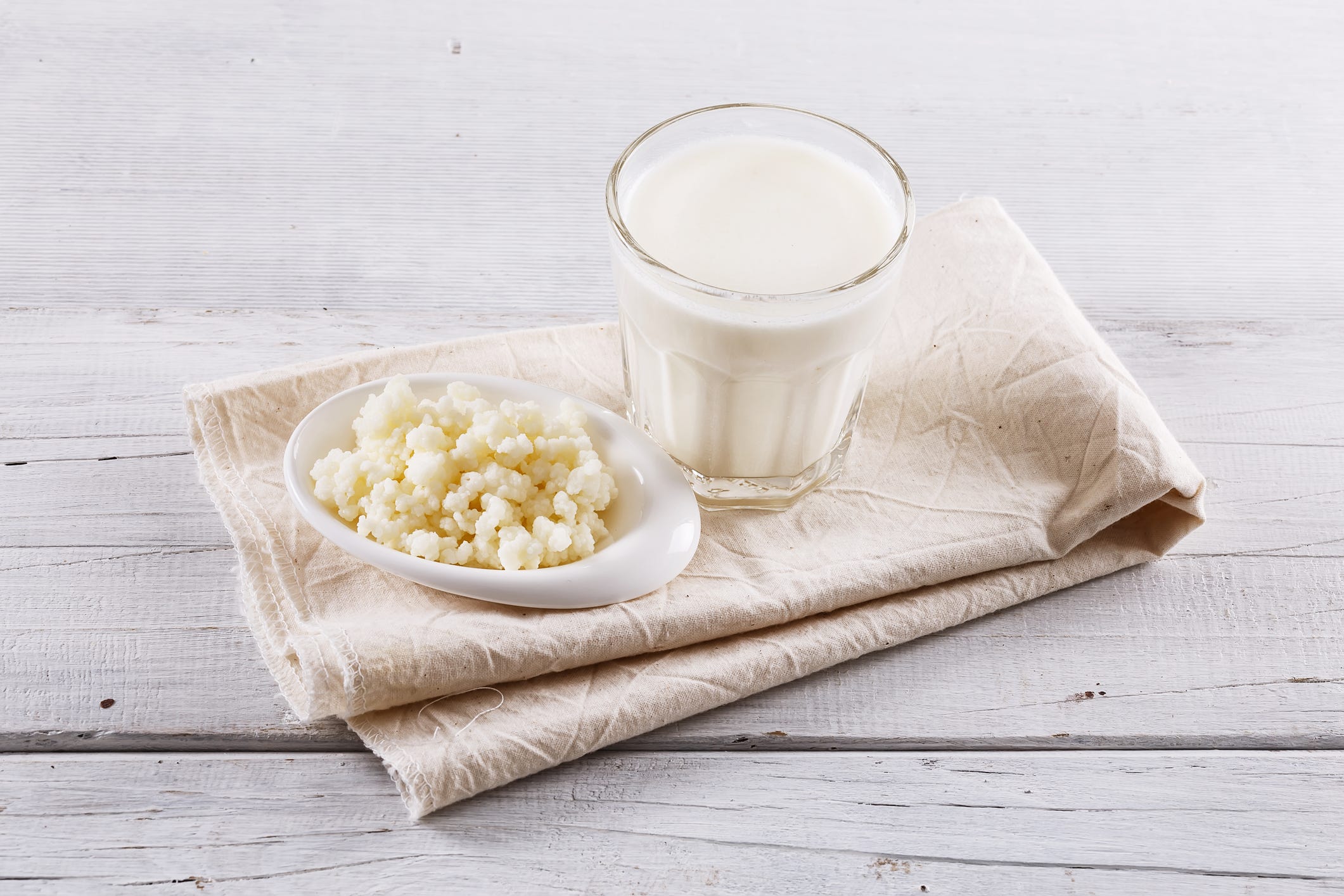
A synbiotic combination (fermented kefir + prebiotic fiber)
All three reduced inflammatory markers.
However, the combination of kefir and prebiotic fiber lowered inflammation more than omega-3 alone and more than fiber alone.
Researchers measured changes in a 96-protein inflammation panel, including markers such as IL-6, IFN-γ, TNF-α, and several chemokines involved in immune signaling. The synbiotic intervention reduced a broader range of inflammatory proteins compared to the single-nutrient approaches.
The findings suggest that combining live microbes with the fibers that feed them produces a stronger anti-inflammatory effect than using a single isolated nutrient.
This is the part many people don’t consider: How foods work together. And in particular, how fermented foods work.
There’s an assumption that fermented foods are all about consuming microbes. And that these microbes will “repopulate the gut”. They won’t. That’s not their job.
We have to see fermentation in a different light.
1. When a food ferments, the microbes produce metabolites that act as signals and can provide the benefits.
2. When fermented foods are consumed, the microbes will interact with other foods, help ferment them, and produce more metabolites.
The microbes are not helping us as much as they are helping us get more from our food.
If you spoke with many “health experts” about the digestion of food, they would tell you that digestion occurs in the small intestines and that only fiber makes it to the colon. All the nutrient benefits have been absorbed into the body.
This is an old-school notion that is far too simplistic and does not consider the role of microbes. Yes, fiber will feed microbes in the colon, but the truth is, food feeds microbes that exist throughout the GI Tract, starting in the mouth.
And while fiber will feed microbes, it’s not the only element in foods that makes it to the colon. Different phytonutrients can also reach the colon. But these work with microbes and fiber to deliver greater value to us.
Here’s a simple example.
Blueberries + Yogurt: The microbes in yogurt enhance the bioavailability of polyphenols in blueberries, promoting gut health and immunity.
When researchers say soluble fiber in oats enhances the antioxidant benefits of blueberries, they’re not suggesting a direct chemical interaction.
Most anthocyanins in blueberries aren’t absorbed in the small intestine — they reach the colon, where gut microbes break them down into smaller, bioactive compounds.
Soluble fiber feeds those microbes.
So when blueberries are eaten with oats, the fiber supports microbial fermentation, which can increase the production of beneficial polyphenol metabolites and improve antioxidant and anti-inflammatory signaling.
In simple terms, fiber helps create the microbial environment that activates the full benefits of the polyphenols.
What the fiber and kefir together show is that there is greater benefit, in this case for lowering inflammation, than when the fiber is consumed alone. What are the other potential benefits of this combination? Researchers still have more work to do.
So, it’s not enough to eat kefir, yogurt, oats, or blueberries by themselves for benefits. If we really want to supercharge our food, we need to consider how we combine foods together.
This is what food layering is all about. It creates a method of eating that helps feed as many beneficial microbes as possible, giving us many more beneficial metabolites than if we eat the foods alone.
The examples here are just two foods together. Think about when more foods are combined.
This is the difference between eating nutrients and creating a healthy microbial environment that allows us to function better.
If you like to cook, this should all be good news. It encourages experimentation and the creation of recipes you enjoy. And if you’re looking for ideas, look at traditional cuisines, which often reflect proper food layering, whether people realize it or not.
PS: Some traditionally produced kefirs use selected starter cultures instead of kefir grains. Most research on kefir’s benefits, however, has been conducted with kefir made from traditional kefir grains. If you're not sure whether a kefir product is made from kefir grains, ask the producer.
Kefir grains can also be purchased with instructions for making kefir at home—and it’s probably one of the easiest fermented foods to make.
PPS: The Digester’s Gut System introduces a simple, flexible way to use food layering to help meals support gut microbes so they do more for us. The approach works whether meals are cooked from scratch or added to already prepared meals. It also discusses other aspects we need for gut function, including lifestyle considerations. We might as well look at the whole picture.
Very interesting article, Lorene. So happy that you talked about putrefaction. I am no scientist but like you said if humans have been eating meat for so long, it can’t be all bad. Granted, the meat our ancestors ate was of a better quality than what we have today.
Food combination is another topic that all older cultures seemed to think about and follow. In Ayurveda for instance, there are several food combinations that are discouraged.
Thanks for writing this 🙏